

Border Collie Tick Prevention — SFTS, Babesiosis, MDR1 Mutation, and Evidence-Based Parasite Control
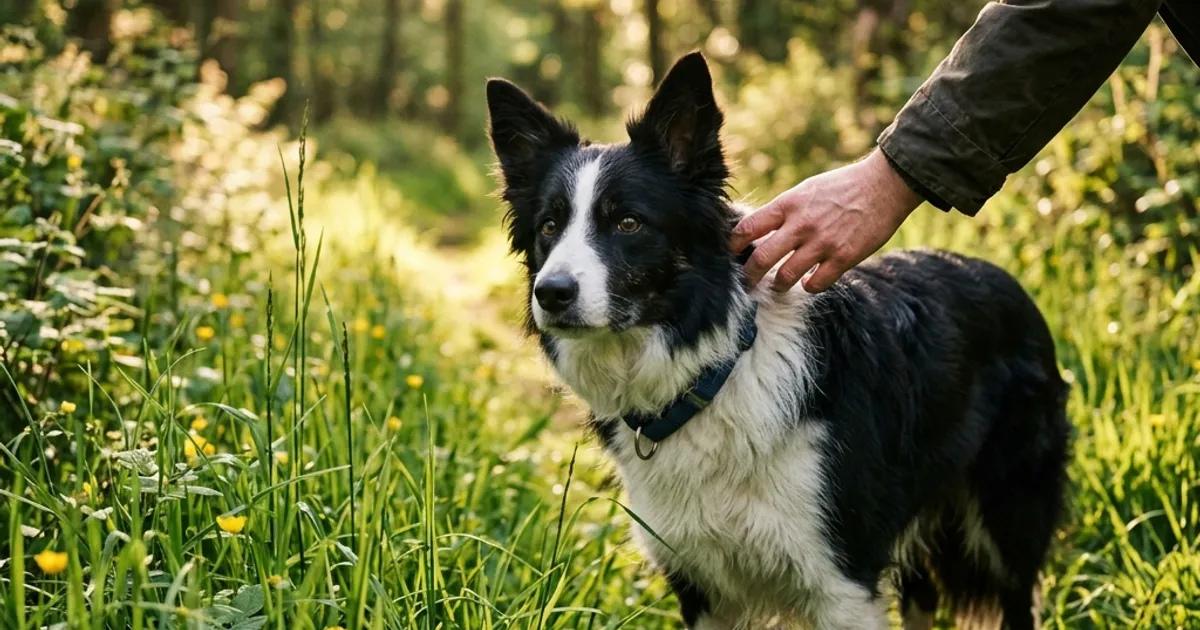
Spring meadows are beautiful. But waiting quietly at the tips of the grass is a hidden threat.
When temperatures climb above 15°C (59°F), ticks become fully active. For an outdoors-oriented Border Collie, tick prevention in this season isn’t just a “nice-to-have” measure — it’s a matter of life and death.
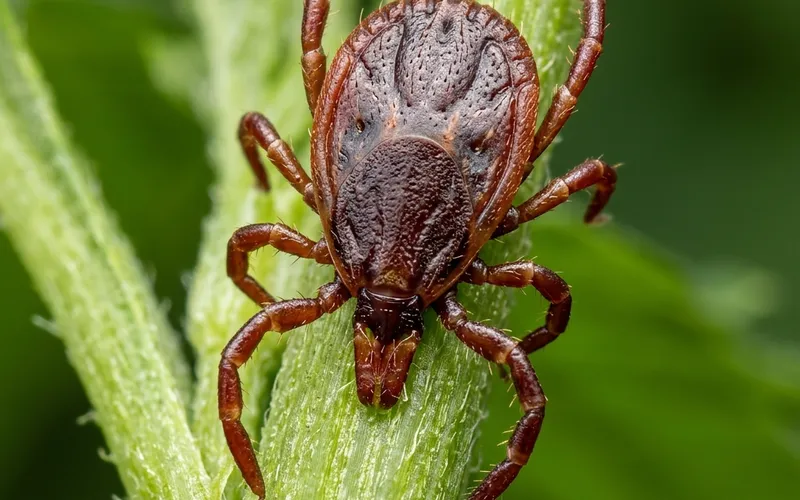
Japan’s Major Tick Species — Four You Need to Know
Japan is home to approximately 40 tick species. The four most clinically significant to pets and their owners are:
| Species | Distribution | Peak Activity | Major Diseases Transmitted |
|---|---|---|---|
| Haemaphysalis longicornis (Asian longhorned tick) | Nationwide (Hokkaido to Okinawa) | May–October | SFTS, Japanese spotted fever, babesiosis |
| Haemaphysalis flava | West of Kanto, mainly Pacific coast | Sept–October | Japanese spotted fever |
| Ixodes persulcatus (taiga tick) | Hokkaido, mountainous central Honshu | Spring–autumn | Lyme disease |
| Amblyomma testudinarium | Western Japan, Kyushu | Year-round (warm regions) | SFTS |
The general rule of thumb: tick activity picks up above 15°C (59°F). In most of Japan this means April through October. In milder lowland areas of western Japan, ticks remain partially active even in winter. Mountain environments above 1,200m (3,940 ft) are not exempt — I. persulcatus has been recorded in subalpine zones.
Tick-Borne Diseases — A Serious Risk for Dogs
SFTS (Severe Fever with Thrombocytopenia Syndrome) — 10–30% Fatality in Humans
SFTS virus (family Phenuiviridae, genus Bandavirus) was first confirmed in Japan in 2013. It is transmitted primarily by H. longicornis. Human case fatality rates range from 10–30% (Japan Institute for Health Security [JIHS], updated 2024).
Recent epidemiological trends point to an expanding geographic range:
- 2023: 134 human cases — the highest annual count since mandatory reporting began
- 2024: 120 human cases (cumulative total exceeds 1,050)
- 2025: First confirmed cases in Kanagawa Prefecture (Kanto region) and Hokkaido — SFTS is no longer a “western Japan disease”
For dogs, the prognosis is even more sobering. The case fatality rate in dogs is approximately 40% (2024 surveillance data: 12 confirmed canine cases). Cats fare worse, with fatality rates exceeding 60%. Human-to-human transmission through contact with infected animals was documented for the first time in Japan in 2023 (Yamaguchi Prefecture).
Tick prevention protects not only the dog but also reduces the owner’s risk of exposure.
Japanese Spotted Fever — ~300 Cases per Year, Including Fatalities
Caused by Rickettsia japonica, transmitted mainly by H. flava and H. longicornis. Approximately 300 cases per year have been reported in recent years, with a peak in September–October. Delayed treatment can lead to multi-organ failure; 13 deaths were recorded in 2019.
Canine Babesiosis — Can Require Blood Transfusion
Babesia gibsoni (Asian genotype), transmitted by H. longicornis, causes a protozoal infection specific to dogs. Historically concentrated in Kyushu and western Japan, cases have been reported as far north as Aomori Prefecture.
The hallmarks are hemolytic anemia (present in 87% of infected dogs) and thrombocytopenia (98%), accompanied by fever, lethargy, jaundice, and hemoglobinuria. Severe cases require blood transfusions. Even after treatment, the relapse rate is approximately 35% (Journal of the Japan Veterinary Medical Association, vol. 68, 2015), making chronic management a real concern.
Border Collies and MDR1 Mutation — What to Know Before Choosing a Preventive
One topic that consistently comes up with Border Collies is the MDR1 mutation (ABCB1 gene, c.227_230del — a 4-base pair deletion). This mutation compromises the P-glycoprotein that forms a key component of the blood-brain barrier, causing certain drugs to accumulate at dangerously high concentrations in the brain.
Critically, Border Collies and Rough Collies are not the same in this regard. The two breeds are frequently conflated in online discussions, but the data tell a very different story:
| Breed | MDR1 Mutation Allele Frequency | Source |
|---|---|---|
| Rough / Smooth Collie | 35–40% | Washington State University (WSU) |
| Shetland Sheepdog | 15–35% | WSU |
| Border Collie (North America, n=306) | ~1.6% | Mealey et al., PNAS, 2004 |
| Border Collie (13 European countries) | 0% | Multiple studies |
| Border Collie (Mexico) | ~3.3% | Kawabata et al., 2012 |
The mutation frequency in Border Collies is low — not zero, but substantially lower than in Rough Collies. High-dose drug protocols (e.g., ivermectin for mange treatment) warrant genetic testing before use. However, ivermectin at standard heartworm prevention doses (6–12 μg/kg) is generally considered safe even in MDR1-homozygous dogs because of the large margin between prophylactic and neurotoxic doses.
Choosing a Preventive — Evidence-Based Comparison
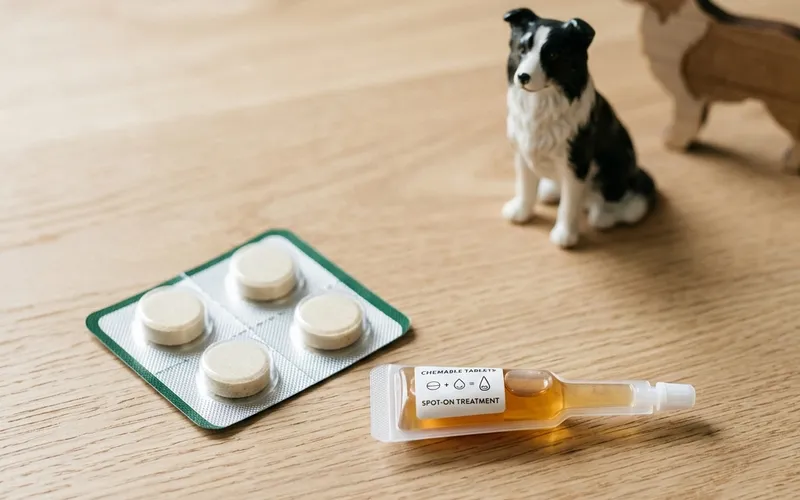
Isoxazolines — The Current Standard of Care
Isoxazolines work by inhibiting GABA-gated and glutamate-gated chloride ion channels in insects and acarines, causing hyperexcitation and death. Their favorable safety profile in mammals stems from lower affinity for mammalian receptors compared to those of ticks and fleas.
Most importantly for Border Collie owners: three major isoxazolines have been formally evaluated in MDR1-homozygous collie dogs, and all three were found safe at doses well above standard recommendations.
| Active Ingredient | Brand (Japan) | Duration | Safety in MDR1-Mutant Dogs | Reference |
|---|---|---|---|---|
| Afoxolaner | NexGard / NexGard Spectra | 1 month | No adverse events at 3.8–4.7× the recommended dose | Drag et al., 2022 (PMC9543253) |
| Fluralaner | Bravecto | 3 months | No adverse events at 3× dose (168 mg/kg) | Heckeroth et al., 2014 (PMC3975640) |
| Lotilaner | Credelio / Credelio Quattro | 1 month | No neurological signs at 5× dose | Parasites & Vectors, 2025 (PMC12020015) |
These trials were conducted with collie dogs carrying the homozygous MDR1 deletion — the most stringent test scenario — providing strong evidence for safe use in Border Collies.
Lotilaner has lower inhibitory potency against mammalian GABA receptors than the other two agents, which may translate to a lower risk of central nervous system side effects (Journal of Veterinary Pharmacology and Therapeutics, Zhou, 2022).
Regarding sarolaner (Simparica): the FDA issued a 2018 safety alert concerning neurological adverse events in dogs; dedicated safety data for MDR1-mutant dogs remains limited at this time.
Spot-On Formulations — An Alternative When Oral Administration Is Difficult
Fipronil-based spot-on treatments (e.g., Frontline Spot On) accumulate in sebaceous glands and distribute across the coat. They can be used from 10 weeks of age, and tick efficacy persists for approximately one month. The systemic drug exposure is lower than with oral agents, but treated animals should be kept away from other pets and children until the application site dries completely.
Practical Tick Management
When and How to Check
Conducting a full-body check within 30 minutes of returning indoors is best practice. Ticks require several hours to begin feeding, so early detection dramatically reduces the window for pathogen transmission.
High-priority areas to check:
- Base and inside of the ears
- Around the eyelids
- Under the chin and throat
- Armpits and groin (inner thighs)
- Between toes and under paw pads
- Base of the tail
Removing a Tick Safely
Do not squeeze the tick body or attempt bare-handed removal. Compression of the tick’s body can force infected fluids back into the wound. Use a purpose-made tick removal tool (hook-style), grasp the tick as close to the skin as possible, and rotate slowly while pulling upward. Disinfect the bite site with isopropyl alcohol. Monitor for 7–14 days; fever, reduced appetite, or lethargy warrants a veterinary visit.
Environmental Control
Ticks favor tall grass, low shrubs, and leaf litter. Minimizing exposure during walks, mowing grass, and clearing fallen leaves from outdoor resting areas are all practical deterrents.
Running through nature is part of a Border Collie’s core identity. The goal is not to eliminate that freedom, but to protect it through medication, observation, and environmental management.
About ROSCH KENNEL: A Border Collie specialist breeder located within Kirishima Kinkowan National Park in Kagoshima, Japan, at 750m (2,460 ft) elevation. Genetic testing covering 15+ health markers is performed on all breeding dogs, with results published openly. ENS (Early Neurological Stimulation) is implemented with every litter.
References
- Japan Institute for Health Security (JIHS). “Overview of SFTS cases reported under the Infectious Disease Surveillance System.” Updated October 31, 2024.
- Ministry of Health, Labour and Welfare, Japan. “Severe Fever with Thrombocytopenia Syndrome (SFTS).”
- Japan Institute for Health Security (JIHS). “Lyme Disease Notification Data, 2006–2024.”
- Journal of the Japan Veterinary Medical Association, vol. 68 (2015). “Canine Babesiosis.”
- Mealey KL, et al. “Breed distribution and history of canine mdr1-1Δ.” PNAS, 2004. doi:10.1073/pnas.0402374101
- Drag M, et al. “Safety of oral afoxolaner formulated with or without milbemycin oxime in homozygous MDR1-deficient collie dogs.” J Vet Pharmacol Ther, 2022. PMC9543253
- Heckeroth AR, et al. “Safety of fluralaner in MDR1(-/-) Collies after oral administration.” Parasites & Vectors, 2014. PMC3975640
- Safety of Credelio Quattro in homozygous MDR1-mutant collie dogs. Parasites & Vectors, 2025. PMC12020015
- Zhou X. “Current review on the mechanisms of action and regulatory approval status of isoxazoline ectoparasiticides.” J Vet Pharmacol Ther, 2022.
- Kawabata A, et al. “Prevalence of the MDR1 c.227_230delATAG mutation in Border Collies from Mexico.” Journal of Veterinary Diagnostic Investigation, 2012.
- Washington State University Veterinary Clinical Pharmacology Laboratory. “Affected Breeds — MDR1 Mutation.” vcpl.vetmed.wsu.edu
Daily observation is where the next article begins.
Instagram shows the dogs in daily life. The journal turns the themes we notice there into evidence-aware resources.