

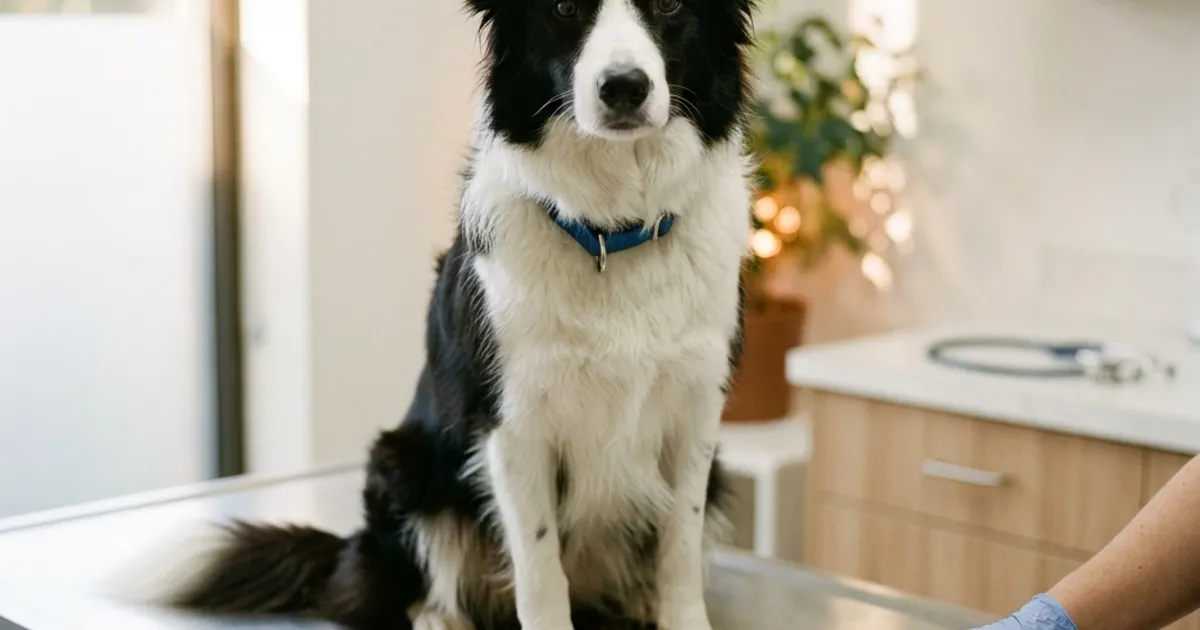
Border Collie Vaccination Guide — The Science and Practice of Rabies and Core Vaccines
Every spring, dog owners face the same season of questions. Which vaccines are truly necessary? Are annual shots still the right approach? And if you own a Border Collie — a breed with its own genetic quirks — are there specific things to watch for?
Vaccination is not a ritual to perform without thought. It requires understanding the legal framework, reading the scientific evidence, and having an informed conversation with your veterinarian about your individual dog’s circumstances.
Rabies Vaccination: A Legal Obligation in Japan
In Japan, the Rabies Prevention Law (enacted 1950) requires that all registered dogs aged 91 days or older receive a rabies vaccination once per year. Traditionally, the designated injection period was April 1 – June 30, but the Ministry of Health, Labour and Welfare announced a revision in 2026 that will allow year-round vaccination starting April 2027. Failure to vaccinate carries a fine of up to 200,000 yen. Following vaccination, owners must attach the issued proof tag to the dog’s collar.
Japan is one of the world’s few rabies-free countries. The last confirmed domestic case of canine rabies was in 1957; the last human infection from domestic exposure was 1956. A research team at the University of Tokyo modeled the risk of rabies reintroduction through animal imports and estimated an average interval of 49,444 years before a successful incursion — given Japan’s geographic isolation and stringent import quarantine protocols (University of Tokyo, official release).
If Immunity Lasts Years, Why Annual Shots?
It is a fair question, and the science is clear that immunity from rabies vaccination persists far longer than one year.
The Rabies Challenge Fund long-term study by Rupprecht et al. (2020, PMC7088826) exposed vaccinated dogs to live rabies virus at intervals up to eight years post-vaccination. The survival rates were:
| Challenge timing | Survival rate |
|---|---|
| 6 years 7 months post-vaccination | 80% (4/5 dogs) |
| 7 years 1 month post-vaccination | 50% (6/12 dogs) |
| 8 years post-vaccination | 20% (1/5 dogs) |
Immunity held strongly for at least five to seven years, but protective efficacy declined sharply after year eight.
A cost-benefit analysis by Ishi et al. (2018, PLOS ONE, PMC6296744) calculated the annual cost of Japan’s mandatory rabies vaccination program at approximately USD 160 million and concluded that relaxing the requirement to once every two to three years would maintain equivalent public health protection in a rabies-free country.
The takeaway: the scientific rationale for annual boosters is weak in rabies-free regions, but the legal obligation remains unchanged in Japan. Owners must comply regardless of their views on the underlying evidence.
Core vs. Non-Core: Understanding the WSAVA 2024 Framework
Beyond rabies, veterinarians routinely offer combination vaccines that protect against multiple diseases. The World Small Animal Veterinary Association (WSAVA) released updated vaccination guidelines in 2024 (Squires RA et al., Journal of Small Animal Practice, PMID 38568777), providing the clearest current framework for vaccine selection.
Core Vaccines (Recommended for All Dogs)
| Antigen | Disease |
|---|---|
| Canine Distemper Virus (CDV) | Distemper |
| Canine Adenovirus Type 2 (CAV-2) | Infectious hepatitis, tracheobronchitis |
| Canine Parvovirus Type 2 (CPV-2) | Parvoviral enteritis |
These three antigens are recommended for every dog regardless of lifestyle, because the diseases they prevent are widespread, severe, and life-threatening. Parvoviral enteritis, in particular, can be rapidly fatal in unvaccinated puppies.
Non-Core Vaccines (Selected Based on Risk)
Leptospirosis received a significant upgrade in the 2024 WSAVA guidelines: in regions where the bacteria are endemic, it is now classified as an “environmentally dependent core vaccine.” Leptospira is a zoonotic pathogen — infected dogs can shed bacteria in urine, contaminating water sources and posing risk to humans. For Border Collies that regularly swim in rivers or roam through wetland terrain, the risk exposure warrants a conversation with your veterinarian.
Bordetella bronchiseptica (a primary cause of kennel cough) is recommended for dogs with frequent contact with other dogs — boarding facilities, dog parks, or training classes.
Puppy Series Protocol (WSAVA 2024)
| Timing | Action |
|---|---|
| 6–8 weeks of age | First core vaccine |
| Every 2–4 weeks thereafter | Additional core vaccines |
| Final dose at or after 16 weeks of age | Critical: ensures maternal antibody (MDA) interference has waned |
| 6–12 months after puppy series | 12-month booster |
| Adult core vaccines (CDV/CAV/CPV) | Every 3 years |
| Rabies vaccine (Japan) | Every year (legal requirement) |
The 16-week threshold for the final puppy dose is not arbitrary. Maternal antibodies transferred from the dam can neutralize vaccine antigens — if the final dose is given too early, the pup may appear vaccinated while failing to build lasting immunity. Confirming that the last dose in the series was administered at or after 16 weeks is one of the most important questions to ask your breeder or veterinarian.
Adverse Event Rates: What the Data Actually Shows
Social media carries alarmist narratives about vaccine dangers. The data offer a more measured picture.
Japan: Combination Vaccines
Miyaji et al. (2012, Veterinary Immunology and Immunopathology, PMC7112591) surveyed 573 Japanese veterinary hospitals covering 57,300 dogs:
| Event | Rate |
|---|---|
| Any adverse reaction | 63 per 10,000 (0.63%) |
| Anaphylaxis | 7.2 per 10,000 (0.07%) |
| Death | 1 case |
Japan: Rabies Vaccines
Sakaguchi et al. (2021, Journal of Veterinary Medical Science, PMC8437711) analyzed 15 years of national adverse event reports (2004–2019):
| Event | Rate |
|---|---|
| Anaphylaxis confirmed | 0.15 per 100,000 vaccinations |
| Anaphylaxis-related death | 0.10 per 100,000 vaccinations |
| Estimated annual deaths | ~10 dogs nationwide |
The same study found that all four commercially available rabies vaccines in Japan contained bovine serum albumin (BSA) at 0.1–16.6 µg per dose, identifying BSA as a potential sensitizing allergen.
United States: Large-Scale Cohort (2023)
Moore et al. (2023, Journal of the American Veterinary Medical Association, PMID 37451674) analyzed data from 1,119 hospitals covering 4.65 million dogs over five years:
- Overall adverse event rate: 19.4 per 10,000 (0.19%)
- Smaller body weight significantly increased risk
- Multiple vaccines administered on the same day increased risk
- Breeds most frequently affected: French Bulldogs (55.9/10,000), Dachshunds (49.4/10,000), Boston Terriers — predominantly brachycephalic and small breeds
- Border Collies were not identified as a high-risk breed
- The overall rate has halved compared to 2002–2003 data (38.2/10,000), reflecting improved vaccine formulations and protocols
Border Collie-Specific Considerations
TNS (Trapped Neutrophil Syndrome) and Vaccination
TNS is a hereditary immunodeficiency unique to Border Collies, caused by a mutation in the VPS13B gene. Neutrophils are produced normally in the bone marrow but fail to be released into peripheral circulation, leaving the dog profoundly vulnerable to bacterial infections. The carrier allele frequency in Border Collie populations is approximately 7–8% worldwide (UC Davis Veterinary Genetics Laboratory).
The relationship between TNS and vaccination is indirect but clinically important: TNS-affected puppies often first come to veterinary attention due to severe reactions following their initial vaccination at around 12 weeks of age (Allenspach K et al., 2022, PMC9708390). This is not a vaccine-caused reaction in the conventional sense. Rather, a puppy with TNS has severely compromised neutrophil function and cannot mount adequate immune responses — even modified live vaccine components can trigger disproportionate illness in severely affected individuals.
For any puppy showing signs of failure to thrive, recurrent infection, or unexplained fever, TNS genetic testing before the first vaccine series is a reasonable precaution.
MDR1 (ABCB1) Gene Mutation
The MDR1 (ABCB1-1Δ) mutation reduces the function of P-glycoprotein, a drug efflux pump at the blood-brain barrier, allowing certain drugs to accumulate in the central nervous system at toxic concentrations. High-risk drugs include ivermectin (at high doses), loperamide, vincristine, and doxorubicin.
The classic 4-bp deletion variant occurs at low frequency in Border Collies in the US and Germany (~1%). However, Nakata et al. (2013, BMC Veterinary Research, PMC3834651) identified a distinct variant (c.-6-180T>G) in Japanese Border Collies at an allele frequency of 24.9% — a markedly higher prevalence than the classic deletion in other populations.
There is no published evidence that standard vaccine components — antigens or adjuvants such as aluminum hydroxide — are MDR1 substrates or cause heightened adverse reactions in MDR1-affected dogs. The concern, where it applies, is with pre-medications (such as antihistamines given before vaccination) that may include drugs metabolized differently in MDR1-mutant individuals. Owners of dogs confirmed to have homozygous MDR1 mutations should inform their veterinarian before any pre-medication is administered.
Titer Testing: A Science-Based Alternative to Routine Boosters
WSAVA 2024 explicitly endorses serum antibody titer testing as a legitimate alternative to routine three-year boosters for core vaccines. Taggart et al. (2023, PMID 37418822) measured antibody levels in dogs five years after their last core vaccination:
| Antigen | Antibody-positive rate at 5 years |
|---|---|
| CDV (Distemper) | 62% |
| CAV2 (Adenovirus) | 92% |
| CPV (Parvovirus) | 92% |
More than nine in ten dogs still had protective levels of parvovirus and adenovirus antibodies five years post-vaccination. For many adult dogs, three-year intervals may already be conservative.
Practical Notes on Titer Testing
- In-clinic rapid tests (e.g., VacciCheck): approximately ¥6,000–8,000 in Japan; results in 20 minutes
- Best candidates: dogs with previous adverse reactions, senior dogs, dogs with chronic illness
- Key limitation: titer testing cannot substitute for Japan’s annual rabies vaccination requirement — the legal obligation remains unchanged regardless of measured antibody levels
Titer testing gives owners and veterinarians a data-driven basis for decisions. A dog with a strong CPV titer does not need an immediate booster; a dog with a low CDV titer does. This individualized approach, endorsed by WSAVA, reduces the total vaccine burden over a dog’s lifetime without compromising protection.
Day-of Vaccination: What to Watch For
Before the appointment
- Postpone if the dog shows any sign of illness: lethargy, reduced appetite, loose stool, or elevated temperature
- Always inform the veterinarian of any prior adverse reactions
The 24–48 hours following vaccination
- Mild swelling at the injection site, slight lethargy, and reduced appetite for 24 hours are expected and normal
- Seek immediate veterinary attention if you observe: facial swelling (urticaria or angioedema), sudden collapse, vomiting combined with diarrhea, pale gums, or labored breathing — these may indicate anaphylaxis
On same-day multiple vaccine administration
- The Moore et al. 2023 cohort study confirmed that administering multiple vaccines on the same day increases adverse event risk
- For dogs with a prior adverse event history, it is worth discussing with your veterinarian whether spacing rabies and combination vaccines across separate visits is preferable
Summary: From Obligation to Informed Choice
Vaccination is most effective — and most safely administered — when approached as an active, evidence-informed decision rather than a passive annual checkbox.
- Rabies vaccine: Annual injection is legally required in Japan. The scientific evidence for annual boosters in a rabies-free country is limited, but the legal obligation is not
- Core vaccines (CDV/CAV/CPV): Puppy series → 12-month booster → every 3 years per WSAVA 2024. Titer testing is a scientifically valid option for adults
- Non-core vaccines: Selected based on actual environmental exposure risk
- Border Collie-specific: Know your dog’s TNS and MDR1 status. Inform your veterinarian of any confirmed mutations before vaccination or pre-medication
Vaccination is neither a blanket checkbox nor something to avoid out of fear. The durable approach is to read the evidence, match it to the individual dog and environment, and make decisions with a veterinarian who understands both.
About ROSCH KENNEL: A Border Collie specialty breeder located at 750m elevation within Kirishima-Kinkowan National Park, Kagoshima, Japan. All breeding dogs undergo 15+ genetic health tests, including TNS, with results published in full.
References
-
Squires RA et al. (2024). 2024 guidelines for the vaccination of dogs and cats. Journal of Small Animal Practice. PMID: 38568777. WSAVA PDF
-
Rupprecht CE et al. (2020). Duration of immunity after rabies vaccination in dogs: The Rabies Challenge Fund research study. PMC7088826.
-
Sakaguchi M et al. (2021). Anaphylaxis after rabies vaccination for dogs in Japan. Journal of Veterinary Medical Science 83(8). PMC8437711.
-
Ishi A, Hayama S et al. (2018). Benefit-cost analysis of the policy of mandatory annual rabies vaccination of domestic dogs in rabies-free Japan. PLOS ONE. PMC6296744.
-
Miyaji K, Sakaguchi M et al. (2012). Large-scale survey of adverse reactions to canine non-rabies combined vaccines in Japan. Veterinary Immunology and Immunopathology 145(1-2). PMC7112591.
-
Moore GE et al. (2023). Breed, smaller weight, and multiple injections are associated with increased adverse event reports within three days following canine vaccine administration. Journal of the American Veterinary Medical Association 261(11). PMID: 37451674.
-
Taggart P et al. (2023). Influence of age and vaccination interval on canine parvovirus, distemper virus, and adenovirus serum antibody titers. PMID: 37418822.
-
Nakata K et al. (2013). A novel ABCB1 single nucleotide polymorphism identified in a Border Collie. BMC Veterinary Research. PMC3834651.
-
Allenspach K et al. (2022). Multiorgan neutrophilic inflammation in a Border Collie with “trapped” neutrophil syndrome. PMC9708390.
-
University of Tokyo (2021). Evaluating the risk of rabies introduction into Japan. Official release
-
Rabies Prevention Law, Japan (Act No. 247 of 1950). e-Gov Law Database.
Daily observation is where the next article begins.
Instagram shows the dogs in daily life. The journal turns the themes we notice there into evidence-aware resources.